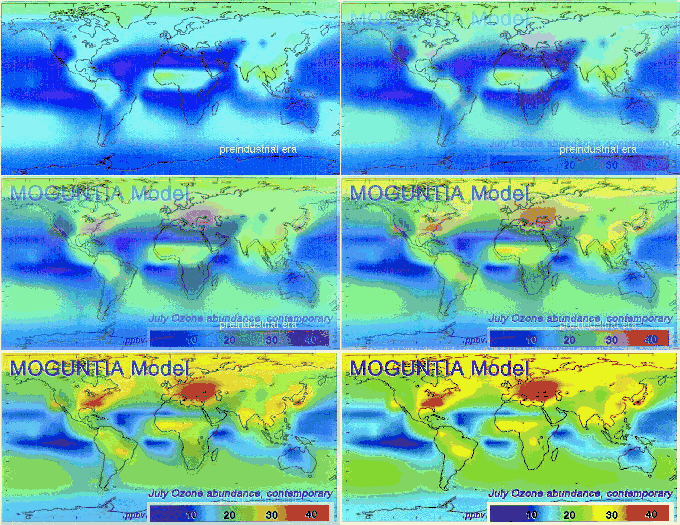
The tropospheric ozone budget is controlled by fluxes from the stratosphere, by photochemistry, and by deposition at the earth's surface. For a long time it was generally accepted that tropospheric ozone entirely derives from the stratosphere, where about 90% of all atmospheric ozone is concentrated anyway. Thanks to scientific advances and the use of numerical models over the last twenty-five years it has become clear, that considerable amounts of ozone can be produced photochemically in the troposphere itself. The photochemistry is strongly controlled by the abundance of NOx (= NO + NO2 ) in the air, in a sense that these molecules catalytically influence the methane oxidation reaction path to produce ozone. The phenomenon of 'summer smog' with high ozone concentrations in the urban boundary layer recently has been drawing increasing attention. NOx -emissions originate from both natural sources such as lightning and microbiological activity in soils and from human activities such as traffic and fossil fuel burning (mainly on the Northern Hemisphere) and biomass burning (during the dry season in the tropics). Current statistics assess that about half of the total global NOx stems from fossil fuel combustion processes in the industrialized countries mainly over Europe and North America. But also the developing countries increasingly contribute to the air pollution.